
Malware in Content Streaming Hardware

A recent report published by the Maharashtra Cyber Digital Crimes Unit (“MCDCU”), highlights the threat of hackers that are targeting popular content streaming hardware (for example, the “Kodi box”) to distribute malware and cryptomining software. As piracy shifts from websites and downloads to devices and apps, hackers are adapting and finding new ways to exploit consumers. They are tapping into a growing consumer trend, the use of illicit devices and apps to access pirated movies, TV shows and live programming, to spread malware, cryptomining campaigns and exploit unsuspecting users. Content streaming devices that enable free streaming of copyright-protected content, often come packed with malicious malware. Such devices give hackers easy access to router settings, can plant malware on shared network devices and are often leveraged to steal user credentials. Such devices, offer hackers a new avenue to exploit consumers and a path to reach other devices on a home network, representing the often unseen link between piracy and consumer security, highlighting the consequences of pirated content consumption beyond the revenues lost by copyright holders. For more information and technical analysis, read the full report here.
IMI WELCOMES LANDMARK BOMBAY HIGH COURT VERDICT
The Hon’ble Bombay High Court’s decision of April 23, 2019 in Tips Industries LTD v Wynk Music LTD (Airtel) which held that INTERNET music streaming and digital downloads are not covered under the Statutory licensing provision of the Copyright Act, 1957 is in important decision for the entire recorded music industry in India. This decision ensures fair licensing of digital services in India also in the future and as such will benefit the Industry as well as users of music. IMI the trade body that represents the interest of the recorded music industry in India has welcomed the verdict of the Bombay High Court in the Tips vs Wynk matter. Tips Industries Ltd a member of IMI has sued Wynk Music which is Airtel’s INTERNET music streaming service. Wynk claimed the benefit of the statutory licensing provision. The Court disagreed with the argument that streaming was covered under the ambit of statutory licensing provisions. In reaching this conclusion the court examined the intention of the Parliament and the provision. Blaise Fernandes, President of IMI said, “This decision confirms IMI’s consistent stand that INTERNET streaming services are not covered under Section 31D of the Copyright Act,1957. As an Industry we noted the intention of our Parliament to provide involuntary licensing benefits under the Copyright Act, 1957 and are very encouraged that the Hon’ble Court has now clarified the intention of our lawmakers did not include streaming services under the statutory licensing scheme.“ Kumar Taurani (Tips MD.) after reading the order said, “This is true justice & I humbly bow in respect to the Indian judiciary. It’s been a long and trying process but we prevailed and justice was served. I’m very happy that the Indian judiciary believed in not only Tips but the whole music industry and vindicated what was right. We are not in a business to arm twist or provoke unnecessary actions onto our partners in the OTT business; but in our case in particular; Wynk was very unfair. Wynk as an INTERNET music streaming service has valuations in millions, despite that they still refuse to pay to music labels few crores, for the labels’ MUSIC content, which is the heart of Wynk’s OTT streaming service, and without a heart ,what good is a body. OTT players until this judgement continued to corner us.” As per the IFPI GMR Report INTERNET streaming in India contributes to 70% of the revenues of the recorded music industry. The decision of the court is expected to boost the online INTERNET music licensing business in India further.
India’s recorded music industry registers 24.5% growth in 2018
The global recorded music market grew by 9.7% in 2018, the fourth consecutive year of growth, according to IFPI, the organization that represents the recorded music industry worldwide. Figures released today in IFPI’s Global Music Report 2019 show total revenues for 2018 were US$19.1 billion driven by an uptake in paid subscription streaming (+ 32.9%, Y-o-Y). The Asia and Australasia region (+11.7%) grew to become the second-largest region for combined physical and digital revenue, with especially strong growth in South Korea (+17.9%) and India (+24.5%). As a fast growing music economy with an average of +21.3% growth over the past three years, India’s recorded music industry revenues increased to $156 Mn in CY18 (INR 1068 Cr.), well positioning India to break into the top 10 music markets by 2022 (India is now ranked 15th in the world, per IFPI metrics). Mirroring the global growth in streaming revenues. India has seen increasing traffic towards legitimate sources of music (audio OTT platforms, video streaming platforms, etc.) driven by an increase in smartphone penetration and low data rates. The penetration of music services to tier II and tier III cities, along with an increasing subscriber base of internet users suggests that the scope for growth for audio streaming consumption (and therefore, revenues) remains large – as emphasized by the increasing competition in the audio OTT industry. The recorded music industry in India has played a key role in ensuring that the burgeoning demand for music is met, through large investments in talent, content creation, marketing and promotion and active licensing policies to online and broadcasting platforms. Further, investments in innovative products such as Carvaan and services such as brand advertising solutions, highlight the continual efforts made by recorded music companies to provide better consumer experience through the popularity of recorded music. These efforts have seen marked growth in the revenues from physical formats (+21.2%) and synchronization revenues (+24.6%). Speaking at the launch of the report, Mr. Blaise Fernandes, President and CEO, IMI said: “Talent, Technology and Tenacity have been the key drivers of the recorded music industry in India, through the ever changing technological and legislative landscapes. Content creators and owners in India are connecting with audiences globally, through the ubiquity of the internet and the reach of online platforms. Supported by the investments, resources of the recorded industry and market intelligence of IMI, the recorded music industry in India is on the cusp of crossing boundaries within India and outside – providing much encouragement to content creators, both established and emerging. It is imperative, therefore, that the investment cycles by rights holders are sustained through fair valuation of music and voluntary licensing norms. The music will keep spinning, and audiences will keep engaging, it is now more important than ever to narrow the value gap and address fair value, which is necessary to keep the party going.” Global Music Report 2019: State of the Industry Report is available to download free here (English language). Global Music Report 2019: Full Report – with Data and Analysis: Purchase the full data and analysis report here.
Global Digital Content Market (GDCM), 2018 – New Delhi
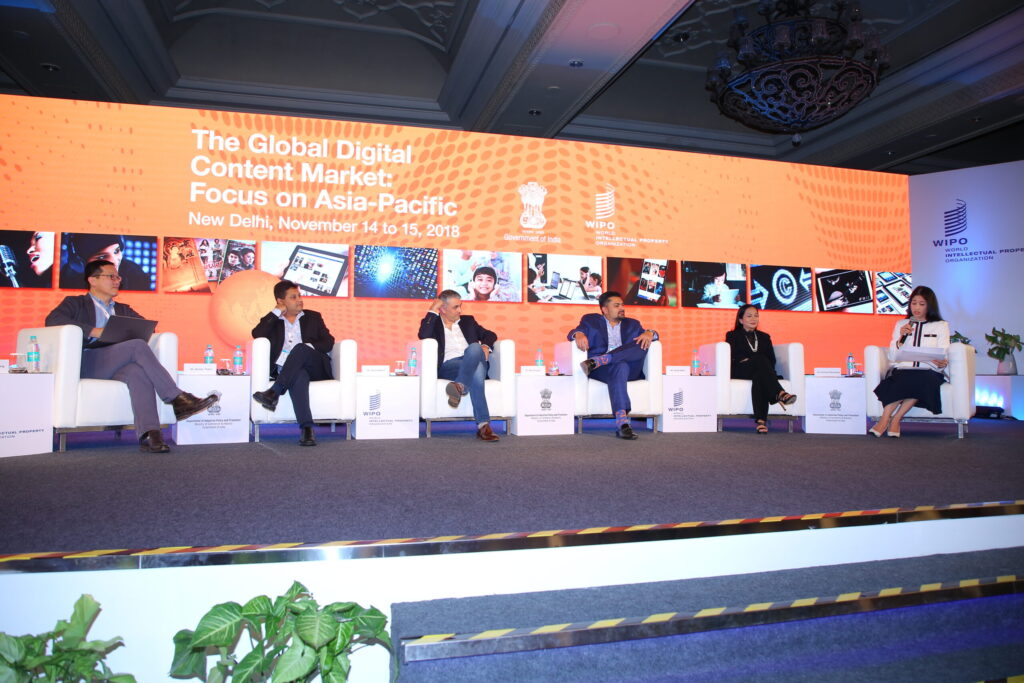
New Delhi – The Department of Industrial Policy and Promotion (DIPP), Ministry of Commerce and Industry, in association with World Intellectual Property Organisation (WIPO) hosted a conference on Global Digital Content Market (GDCM) 2018, from 14th– 15th November 2018. The conference featured sessions on music, film, broadcasting and publishing, as well as collective management, emerging models and the implications for the market and policy makers. Please see the full press release here. Photographs across sessions from both days:
IMI Announces New Chairman of its Board of Directors

Mumbai, Oct. 29, 2018 – The Indian Music Industry (IMI) today announced Mr. Vikram Mehra, Managing Director, Saregama India Limited as the newly elected Chairman of the Board of Directors. This comes in lieu of the retirement of Mr. Shridhar Subramaniam – President India and Middle East – Sony Music India, effective September 27, 2018. Mr. Subramaniam will continue as a board member. Mr. Vikram Mehra has been the Managing Director of Saregama India Limited at RP-SANJIV GOENKA GROUP PRIVATE LIMITED since October 2014. Before joining Saregama, Mr. Mehra served as Chief Marketing Officer and Chief Commercial Officer at Tata Sky Limited. Mr. Mehra was a part of Tata Administrative Services (TAS) and has worked in many TATA companies including Tata motors and TCS. Prior to joining Tata Sky, he was with News Corp owned STAR TV and was at the helm of its foray into DTH and cable services in India. “Vikram’s experience as a global industry leader, as well as his deep understanding of Music business made him the ideal candidate to serve as IMI’s next chairman of the board” said Mr. Subramaniam, outgoing chairman of the IMI board. “For the past four years, Shridhar has provided excellent leadership, and we thank him for his service, dedication and guidance and hope to receive the same kind of a support as a board member” said Mr. Mehra, incoming Chairman of the IMI board. As Chairman of the Board since 2014, Mr Subramaniam led several progressive initiatives at IMI. He spearheaded a landmark agreement between the publisher, the labels and the creative community. He is also accredited with championing causes like official Music Charts, which is a first in the Indian music industry; and commissioning a study to assess the economic impact of the music industry — in terms of employment, the social impact and the soft power that it brings to India as a whole.
Digital Music Study 2018
IFPI designed and ran the Music Consumer Study 2018 across 20 of the world’s major music markets, exploring the music habits of consumers worldwide. Fieldwork was carried out by independent research agency AudienceNet. India was a key part of the study and this document explores some of the insights taken from the responses of the 2,000 surveyed Internet users in India aged between 16-64. The policy implications of this study are also discussed. Key Insights: – Music is central to the lives of Internet users in India. An average user spends 21.5 Hours listening to music per week – more than three hours each day – which is more than the global average of 17.8 hrs/week. – 96% of respondents listened to music on smartphones – the highest rate in the world.- Younger respondents listen to more music than older age groups. Internet users in the 16-24 years age group listened to 23.9 hrs/week as opposed to 21.5 hrs/week national average. – On-demand streaming (comprising paid and free audio streaming services and any kind of video streaming) and social media accounts for nearly half (49%) of all the time spent listening to music. – Piracy continues to have a huge impact on the recorded music industry in India. While the ease of access to licensed content on a plethora of audio streaming platforms offers consumers a simple way to consume licensed music, 76% of internet users still admit to using pirated music in the last three months. – Internet users in India spend nearly 3 hours each week (13% of total time) listening to pirated music. That means Indian internet users listen to pirated music for more time than in any other country in the study. __________________ Read the full report here.
IMI Conducts Workshop for the Eastern Chapter
IMI Conducts Workshop for the Eastern Chapter: Legal Matters, Global Trends and Music Piracy on the Agenda Date: May 30th, 2018 Kolkata: Mr. Devraj Sanyal, MD & CEO, Universal Music Group – India and South Asia, who is also the Sherpa for IMI’s Eastern working group [READ MORE] conducted a workshop in association with the Indian Music Industry (IMI) to update the regional Bengali labels about key music industry challenges and opportunities. This day long workshop had 33 attendees and covered a variety of topics such as Music Industry Legal Matters, Music Industry Digital Trends and Music piracy. Mr. Sanyal said “in order for the Indian music industry to grow globally, it’s imperative that the regional music industries grow locally and participate in the national discourse on key challenges ahead of us. Such workshops are a step in the right direction for us to spread awareness and call for engagement”. Mr. Blaise Fernandes, President and CEO, IMI reiterated the impact of music piracy in the country and said “today, music listeners have an abundance of options for free music streaming, hence they are running out of excuses to pirate music. It is our responsibility to leverage this and redirect our users towards legitimate platforms and work towards a subscription model in the months to come.” Mr. Dibyendu Lahri of Asha Audio said “such workshops are a great opportunity for regional labels like us to get exposed to global music industry trends and participate on key challenges at the national level. I request all Bengali music labels to unite on major agenda items like 31D and fight against music piracy”. The workshop concluded with closing remarks from Mr. Sanyal and a vote of thanks from Mr. Fernandes.
IFPI, IMI & PPL Organised the 1st Ever Indian Music Industry Conclave in Chennai and Chandigarh
Participants in the Southern Chapter: Chennai (23/4/2018) Participants in the Northern Chapter: Chandigarh (26/4/2018) Indian Music Industry (IMI), International Federation of the Phonographic Industry (IFPI) and Phonographic Performance Limited (PPL) jointly held the first ever Indian Music Industry Conclave in Chennai and Chandigarh. Key speakers at the two events included; President and CEO, IMI, Mr. Blaise Fernandes, Regional Director, IFPI, Mr. Ang Kwee Tiang and President & CEO, PPL, Mr. Rajat Kakar. This was Mr. Ang’s third trip to India in the last 9 months, showing a deepening of commitment from the international body to the fast-growing Indian market. The conclave began by lighting the inaugural lamp and felicitating leading luminaries such as Mr. Manohar Naidu of Lahari Music (Bengaluru), Mr. Aditya Gupta of Aditya Music (Hyderabad), Mr. Mandar Thakur of Times Music India and Mr. Naveen Bhandari of Muzik 247 (Chennai) in the Southern Chapter and Mr. Satinder Singh of Speed Records (Jalandhar) in the Northern Chapter. In his opening remarks to the various regional music labels present, Mr. Fernandes said “the objective of the conclave is to strengthen specific regional chapters of the music industry with updates from international and national trends and to allow an open forum for discussions on regional market specific challenges.” Mr. Fernandes presented a “Work in Progress Agenda” of the Indian Music Industry for the next three years, encouraged the stakeholders to become more engaged in helping to create the agenda hence its title “Work in Progress” and join IMI’s lobbying efforts on key issues like Anti-piracy, Value Gap and 31D. Steps that need to be taken to build a robust subscription based eco-system. Mr. Kakar, representing PPL said in his speech “We have aggressive plans to increase revenues with a strategy to engage with clients and simplify tariffs alongside professionalism and transparency. The revamped PPL will have a roadmap for the upcoming years with a goal to increase annual Public Performance royalties collection by 38% in 2019. We plan to implement new technology such as Online Licensing and Audio Fingerprinting to improve licensing efficacy and also work on enhancing the logging and disbursement methodology”. Mr. KT Ang addressed the attendees with optimism towards the future of the Indian music industry despite some major hurdles such as value gap, digital piracy and a lack of paid subscriber base in India. Mr. Ang said “despite double-digit growth for two consecutive years, aided by the incredible success of the music streaming in India, the Indian music industry is yet to achieve its true growth potential or match the trends of the early 2000s. The inability to remunerate the rights owners fairly and the menace of digital piracy continue to hinder progress.” Mr. Ang also presented some key insights from last year’s IFPI Global Music Report 2017 on the Global market and discussed the various challenges in fighting online piracy in India. The conclave concluded with cocktails and dinner.
Indian Music Industry Figures Show 27% Growth Since 2016
APRIL 18, 2018 OVER 25% GROWTH RATE TWO YEARS IN A ROW The total industry revenues grew from 570.7 Cr. in 2016 to 725.6 Cr. in 2017. This increase in revenue by 154.9 Cr. is the largest since 2011 according to IFPI data. The revenues from Music Streaming grew at a rate of 37.26% and revenues from digital music now amounts to over 91% of the Indian recorded music industry revenue. There were two primary factors driving this positive growth in digital music consumption, i.e. increased data consumption in the advent of cheaper data rates and greater smartphone penetration. The digital revenue alone in 2017 was 665.6 Cr. which is greater than the combined industry revenue of 570.7 Cr. in 2016 by almost 95 Cr. Shridhar Subramaniam, President, Sony Music and Chairman, IMI is optimistic about the state of the industry and says “Last year’s figures were phenomenal and we were expecting the market to do well this year as well, but a 27% growth in 2017 has exceeded our forecasts. Going into 2018, our aim is to make music even more accessible, affordable and unlimited. To sustain this growth the industry will start laying the groundwork for a subscription eco-system.” The upward trend in adoption of music streaming services has certainly helped digitalize the recording industry but is not yet steering consumers away from consuming music from pirated websites. Stream-ripping remains a major threat to the music industry in India. According to a 2017 study by IPSOS for IMI, 94% of the 900 surveyed music consumers in India admitted to using some form of piracy to access music. Blaise Fernandes, President and CEO, IMI says “Our story in the past two years has been one of success as evident from an exponential growth in revenue. We’re glad that digital music is claiming a larger part of the pie in line with the global trends. Various initiatives undertaken by the government like Digital India, Bharat Net, CIPAM’s #LetsTalkIP program will enable the Indian music industry is to out-perform most evolved recorded music industries in the digital domain and climb up in rankings in the coming years.” There has also been a small shift from ownership to access and downloads to subscription in the last two years. With international players like Amazon Music entering the market this year, the industry stakeholders plan to steer consumers towards affordable subscription plans to deliver unlimited high-quality content. “While the 2017 figures may paint a pretty picture, Indian Music Industry is still greatly impacted by Digital Piracy and Value Gap.” Said Vikram Mehra Managing Director of Saregama “We must work together in curbing piracy through a multi-pronged approach involving various stakeholders at the state and central level. We must also empower the rights holders to allow them control of the usage of their works in the digital domain and protect their right to fair remuneration. That’s the only way for us to ensure continued double digital growth in the coming years.”
IMI Forms Eastern Working Group
March 09, 2018 Kolkata – The Indian Music Industry the apex body that represents the recorded music industry on a pan India basis has formed an Eastern Working Group to specifically look into the challenges faced by the recorded music industry in Eastern India. The working group will comprise of Mr. D. Lahri (Director, Asha Audio), Mr. Prem Kumar Gupta (Director, Raga Music) and Mr. Biplab Updhaya (Sr. Manager, Times Music). And a board member of IMI, Mr. Devraj Sanyal (MD & CEO, UMG) will be the Sherpa of the eastern working group. Mr. Lahri (Asha Audio) said “he welcomes the formation of EWG and looks forward to holding regular interactions with the IMI Board, the IMI members from Eastern India and finding various solutions to improve the business of the eastern India record companies”. Mr. Blaise Fernandes (President IMI) said “his first task was to organise a number of workshops for members in eastern India to acquaint them on the ever-changing digital landscape, which is a huge opportunity for the music labels , alongside working with the cyber-crime cells of the various states in Eastern India to tackle digital piracy”